0 Comments
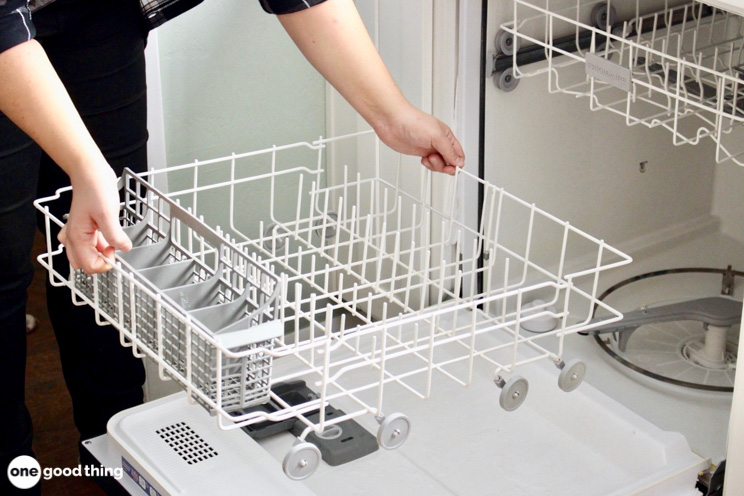
You can get your dishwasher sparkling clean with two things you probably already have in your pantry: vinegar and baking soda. It’s a simple one-two punch that dissolves all that grime and gets rid of any funky smells. This method is my absolute go-to for keeping my machine fresh without ever reaching for harsh chemicals.
Why Your Dishwasher Deserves a Natural Clean
Have you ever opened your dishwasher expecting sparkling dishes, only to be hit with a strange, musty smell? Oh, it’s such a common problem, and it’s usually your dishwasher’s way of telling you it needs a little TLC. Over time, it’s just so easy for gunk to build up in all those hidden nooks and crannies.
This buildup is usually a mix of a few culprits working together to make your machine less effective. Just think about it—tiny food scraps, greasy films, and soap scum get trapped in the filter and spray arms. When you throw hard water minerals into the mix, you end up with that cloudy film on your glassware and a machine that just isn’t getting things truly clean anymore.
The Problem with Buildup
Ignoring all that sneaky grime can lead to some really frustrating issues that go way beyond just a bad smell. When your machine’s vital parts are clogged, it simply can’t do its job right.
Here’s what you might start to notice:
- Persistent Odors That lingering smell is often caused by trapped food particles and even a little mildew growing in the warm, damp environment.
- Spotty or Cloudy Dishes Hard water deposits, like calcium and magnesium, are the main reason for that annoying white film on your glasses and silverware.
- Poor Cleaning Performance If the spray arms are clogged with debris, water can’t reach every dish, leaving you with dirty plates even after running a full cycle.
The good news is you don’t need harsh chemicals to fix it! Simple, natural ingredients like vinegar and baking soda are my secret weapons. They’re not only incredibly effective but also a much kinder choice for your family and your appliance. There are so many clever ways to get the most out of your machine, which is why I put together a list of 10 things you should know about your dishwasher to help it run perfectly.
Gathering Your Simple Cleaning Toolkit
Alright, before we roll up our sleeves, let’s grab the few things we’ll need. The best part about this whole process is that you almost certainly have everything waiting in your pantry right now!
There’s absolutely no need for pricey, specialized cleaners when a couple of simple kitchen staples can deliver incredible, sparkling results. Over the years, I’ve found that just two hardworking ingredients get the job done right, every single time.

The Power Duo for a Naturally Clean Dishwasher
- Distilled White Vinegar: This stuff is a powerhouse. It’s fantastic for dissolving stubborn hard water minerals and cutting right through any greasy buildup. The acidity is exactly what you need to make the inside of your machine sparkle again.
- Baking Soda: My go-to for soaking up and neutralizing any funky, lingering odors. It also acts as a super gentle abrasive, scrubbing away leftover grime without scratching a thing.
Knowing how to clean a dishwasher is just one of the many surprising uses for baking soda that can make your whole cleaning routine easier. It’s truly amazing what this simple box can do!
A Quick Look at Your Supplies
Here’s a quick rundown of the simple, natural ingredients you’ll be using and why each one is so effective.
Your Natural Dishwasher Cleaning Supplies
| Ingredient | Its Purpose | Where to Use It |
|---|---|---|
| White Vinegar | Dissolves mineral buildup and grease | Poured into a bowl on the top rack for a steam-cleaning cycle |
| Baking Soda | Deodorizes and gently scrubs away grime | Sprinkled across the bottom of the dishwasher for a second cycle |
| Old Toothbrush | Gets into tight spaces and small parts | For scrubbing the filter, spray arms, and utensil holder |
| Lemon Oil | Adds a fresh, clean scent (optional) | A few drops mixed into the baking soda before its cycle |
With these few items in hand, you have a complete, non-toxic cleaning kit that will leave your dishwasher looking and smelling brand new.
A Few Optional (but Helpful!) Extras
While vinegar and baking soda are the main stars of the show, a couple of extra items can make the process even easier and leave your machine smelling extra fresh.
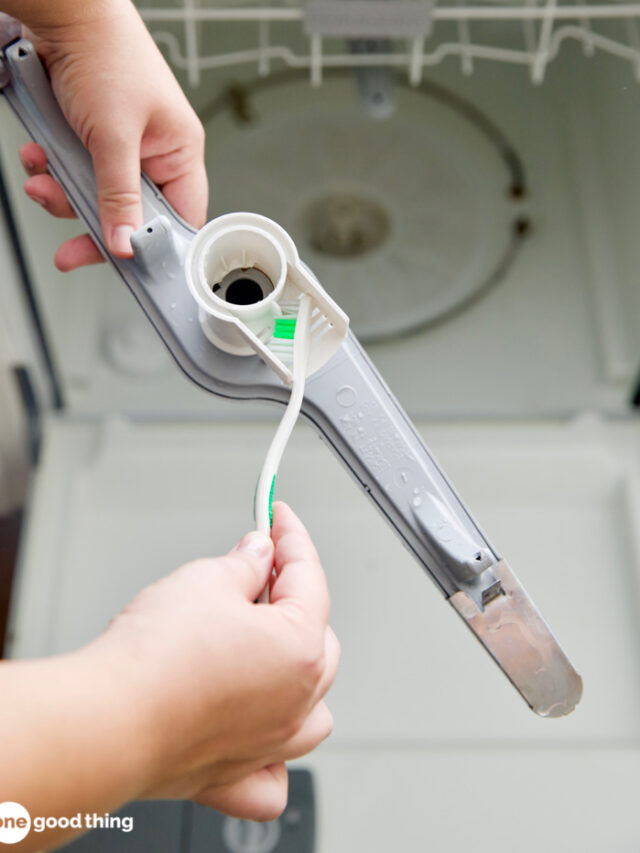
An old toothbrush is perfect for getting into all the nooks and crannies around the filter or inside the spray arms. I also love adding a few drops of lemon essential oil to the baking soda for a lovely, clean scent that fills the whole kitchen
My Two-Cycle Method for a Deep Clean
Alright, let’s get this dishwasher sparkling! I’m going to walk you through my simple, two-part process for a complete refresh. First, we’ll tackle the removable parts, and then we’ll let vinegar and baking soda work their magic. It’s so much easier than it sounds, I promise!
More Ideas You'll Love

Before we start the cleaning cycles, we need to give a little attention to the hardworking parts of your dishwasher. These are the pieces that catch all the gunk, so giving them a quick scrub makes a huge difference.
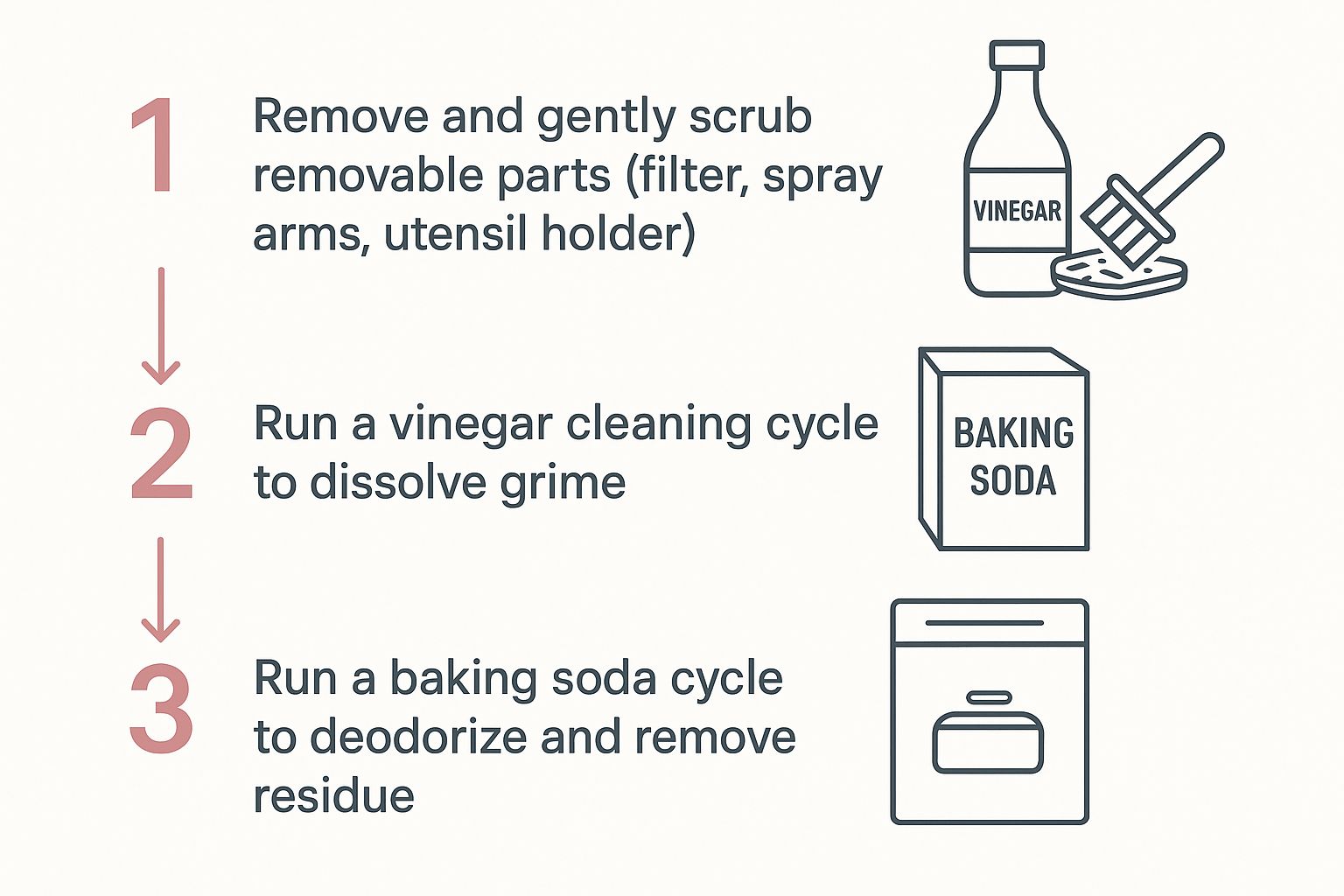
This infographic breaks down my simple three-step flow for a naturally clean dishwasher.
As you can see, the whole process kicks off with that manual scrub, followed by two separate, powerful cleaning cycles.
Pre-Cleaning the Interior Parts
First things first, carefully pull out the filter from the bottom of your dishwasher. Most of them just twist and lift right out, but you can always check your manual if you’re not sure. You’ll also want to grab the utensil holder and, if it comes off, the lower spray arm (it usually just pops off).
Take these parts over to your sink. A little warm, soapy water and an old toothbrush are all you need to gently scrub away any food bits or greasy film. Really focus on the little holes in the spray arm—that’s where clogs love to hide! Once everything is clean, just pop them back where they belong.

Running the Vinegar Cycle
Now for the first cycle! Grab a dishwasher-safe bowl or measuring cup, fill it with about 1-2 cups of distilled white vinegar, and place it securely on the top rack of your empty dishwasher. That’s it!
Run a full cycle using the hottest water setting you have. As the machine runs, the vinegar will mix with the hot water, creating a steamy solution that gets to work dissolving all that stubborn mineral buildup and grease clinging to the walls and racks. This is especially helpful if you struggle with hard water spots on your dishes. You can find more of my tips on how to remove hard water spots from your dishes in another one of my posts!
Don’t be tempted to just pour the vinegar into the bottom of the dishwasher! Placing it in a bowl on the top rack allows it to be released during the main wash cycle, giving it more time to work its magic throughout the entire machine.

Finishing with the Baking Soda Cycle
Once the vinegar cycle is completely finished, it’s time for the final touch. Sprinkle about one cup of baking soda all over the bottom of the dishwasher. Baking soda is fantastic for neutralizing any lingering odors that the vinegar didn’t quite catch.
It also acts as a gentle abrasive to scrub away any remaining bits of grime, leaving the inside smelling fresh and looking bright. Just run another short cycle with hot water.
More Ideas You'll Love

For those who enjoy tackling home projects, understanding the methodology behind other appliance care can be really helpful. For example, learning the steps in a complete DIY cleaning guide for dryer vents highlights similar principles of regular maintenance for keeping things running right.
Once this final cycle is done, you’ll have a dishwasher that’s truly clean from the inside out.
Keeping Your Dishwasher Sparkling Clean

Alright, now that your dishwasher is spotless, how do you keep it that way? The secret is simple, consistent maintenance, and I promise it doesn’t have to be a big chore! I’ve found that a few easy habits are all it takes to prevent that funky buildup from ever coming back.
The most important habit you can start is running a monthly vinegar cycle. Just pop a bowl of white vinegar on the top rack and run a hot cycle, exactly like we did in the deep clean. This simple step works wonders to prevent hard water minerals from taking over, keeping your machine running beautifully.
Smart Habits for a Fresher Machine
Beyond the monthly vinegar rinse, a few other little tricks make a huge difference day-to-day. For instance, I love using leftover citrus peels to keep things smelling fresh. After you squeeze a lemon for a recipe, just toss the peel into the utensil basket before you run your next load of dishes. It’s an effortless way to add a bright, clean scent!
Another key habit is to scrape plates before loading them. You don’t need to rinse them perfectly—in fact, modern detergents actually work better with a little something to cling to! But getting rid of the big stuff prevents your filter from getting clogged with food debris, which is a major cause of odors and poor performance.
It’s amazing how these small, consistent actions add up over time. They are the difference between a dishwasher that struggles and one that sparkles. A little prevention is so much easier than a big cleaning project!
Properly loading your dishwasher also plays a big role. When you give your dishes enough space, water and detergent can circulate freely. This not only cleans your dishes better but also helps rinse away food particles that might otherwise get trapped inside.
These natural additives do more than just clean; they also help extend your dishwasher’s lifespan by preventing corrosion and clogs. Plus, you get to reduce your reliance on harsh chemical detergents, which is a win-win for your home and your appliances.
Speaking of detergents and cycles, figuring out where to put dishwasher pods can also make a big difference in how clean your dishes get. It all works together
This approach fits right in with a routine for all your household helpers. If you’re wondering about your other machines, you can check out my guide on how often you should be cleaning your appliances to keep everything in tip-top shape. Making these small cleanings part of your monthly routine is the best way to stay on top of things.
A great question I often get is whether it’s okay to mix vinegar and baking soda together. You should never run them in the same cycle! Mixing them causes a reaction that neutralizes their cleaning power. To get the full benefit, always run them in two separate cycles.
Troubleshooting Common Dishwasher Problems
Even after you’ve given it a good cleaning, your dishwasher can sometimes throw you a curveball. Maybe it’s a mysterious smell that just won’t quit, or a cloudy film on your supposedly clean glasses. Don’t worry! Most of these common issues have a simple, natural fix.
Before you even think about calling a repair person, let’s walk through some of the most frequent little quirks I hear about from readers. Often, a small adjustment or a targeted natural solution is all you need to get things running perfectly again.
That Stubborn White Film
Are your glasses coming out looking cloudy? The most likely culprit is hard water. Those mineral deposits can be really tough, and sometimes a standard vinegar rinse just isn’t powerful enough to tackle years of buildup.
For an extra-strength solution, try using citric acid. All you have to do is fill your detergent cup with citric acid powder (you can usually find it in the canning aisle at the grocery store or online) and run a normal cycle in your empty dishwasher. It works wonders for dissolving those stubborn mineral stains.

Lingering Odors
If you’re dealing with a fishy or musty smell that sticks around even after cleaning, it usually points to tiny food particles trapped in a hidden spot. You’ve probably already checked the filter, but take another peek at the rubber seal around the door—gunk absolutely loves to hide in there! Gently wipe it down with a cloth soaked in white vinegar.
It’s so easy to see why so many of us are turning to simple ingredients like white vinegar and baking soda. The acetic acid in vinegar is fantastic at dissolving mineral buildup, while baking soda is a champ at neutralizing odors and acting as a gentle abrasive. And the best part? No harsh chemicals.
Your Questions Answered
I get so many questions about cleaning appliances the natural way, so I’ve gathered the most common ones right here for you. These are my quick, practical answers to help you feel confident as you learn how to clean your dishwasher naturally.
How Often Should I Clean My Dishwasher?
To keep your dishwasher running its best and stop that sneaky buildup from getting out of hand, I recommend doing this full deep clean about once a month.
If you live in an area with very hard water or find that funky odors are popping up more often, you might want to bump that up to every three weeks.
Can I Use Apple Cider Vinegar?
While it has some cleaning power, I always stick with distilled white vinegar for this job. It’s more acidic, which makes it much more effective at breaking down stubborn mineral deposits. Plus, it’s clear and won’t leave any residue behind.
Do you clean your dishwasher regularly?